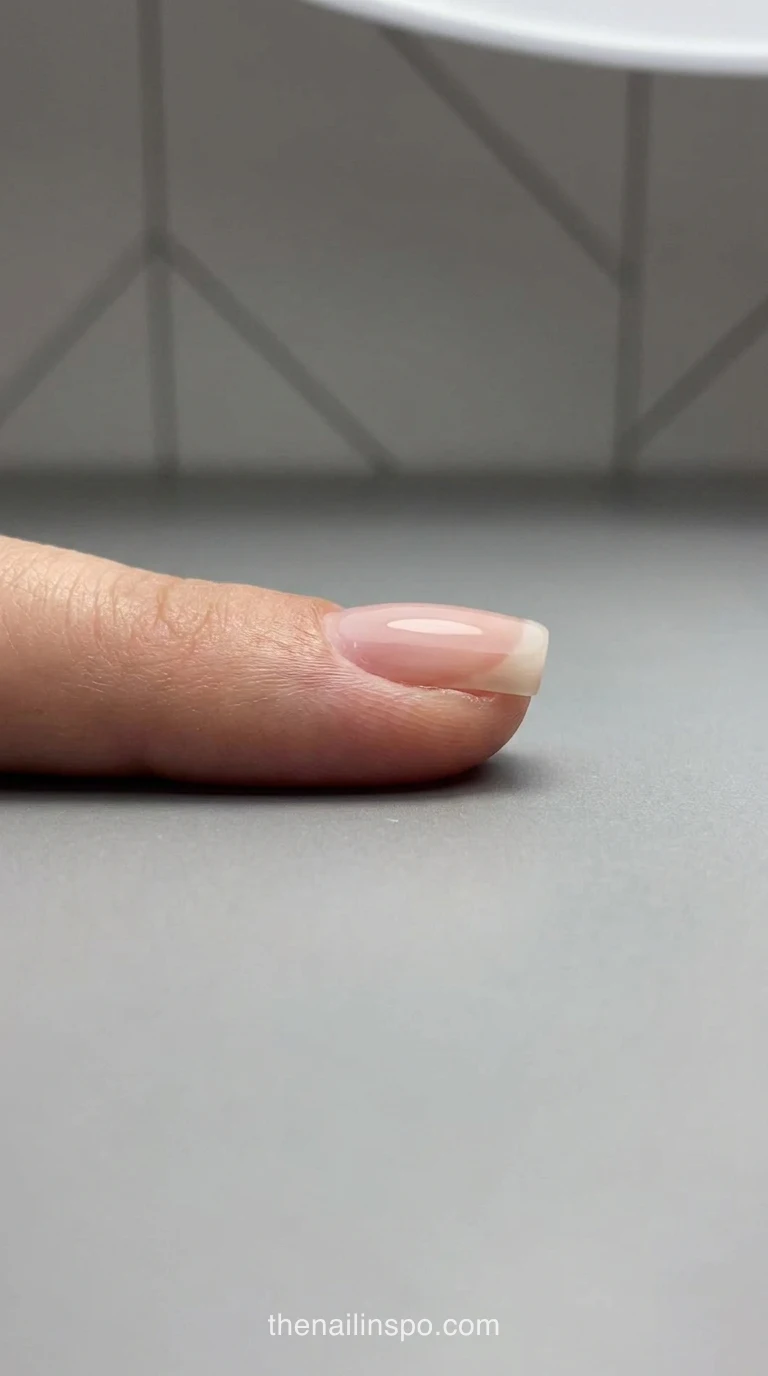
Can you have short acrylic nails? Yes, but the nail sets the limit, not the trend you saw on your feed. The rule I work from is simple: never extend a short nail beyond 50% of its natural bed length. Go past that and the free edge becomes a lever, and levers crack acrylic or pull the natural plate off the nail bed. This guide gives you that limit, the price gap between an overlay and a short full set, and the build order that keeps a short set on between refills.
Key takeaways- A short set holds when the extension stays within 50% of the natural nail bed length.
- One nail takes three bead consistencies: wet at the cuticle, medium at the apex, dry at the free edge.
- The structural apex belongs in the back third of the nail, at 1.0 to 2.0 mm thick.
- Acrylic reaches 60% cure in the first hour and takes 24 to 48 hours to fully polymerize.
- In 2026 US salons, an acrylic overlay typically runs $40 to $65 USD and a short full set runs $45.50 to $95+ USD.
Can You Have Short Acrylic Nails? Yes, Within a Limit
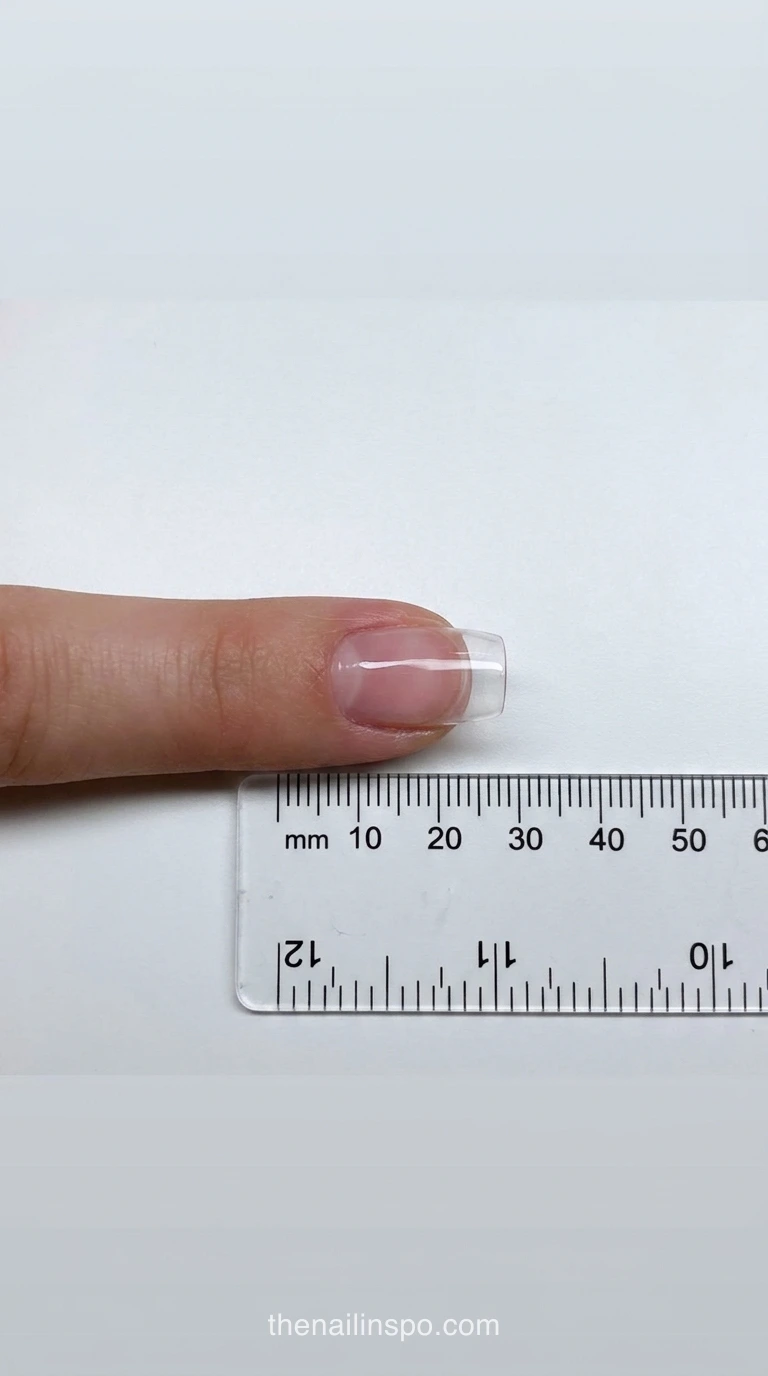
Yes, as long as the extension stays inside half the length of your natural nail bed. Measure the bed from the cuticle to the free edge of the natural nail, not to your fingertip. Anything past that line carries the stress, and it’s the first part to lift.
Short almond is the shape I’d talk most clients out of. On a nail with little free edge, the tech has to file down the lateral sidewalls to get that taper, and those sidewalls are what hold the set. A squoval or a short square keeps more of the structure intact. I’d take a shape that fits the bed over one that fits a photo.
How Short Can Acrylic Nails Be?
There’s no universal minimum. The working limit is the ratio, because whatever you add has to stay inside half your natural bed. On a very short nail that leaves little room for a free edge, so the bond area is small and every extra millimeter works harder.
How Long Do Short Acrylics Last in 2026?
A short set lasts as long as its base stays intact, and a refill every 2 to 3 weeks keeps that base intact. Lifting at the cuticle is the early warning. A refill on time catches it before it turns into a full removal.
 Read NextWhy Do Acrylic Nails Lift? 6 Secrets to Stop It Now
Nail Extension Length: The 50% Rule for Short Nails
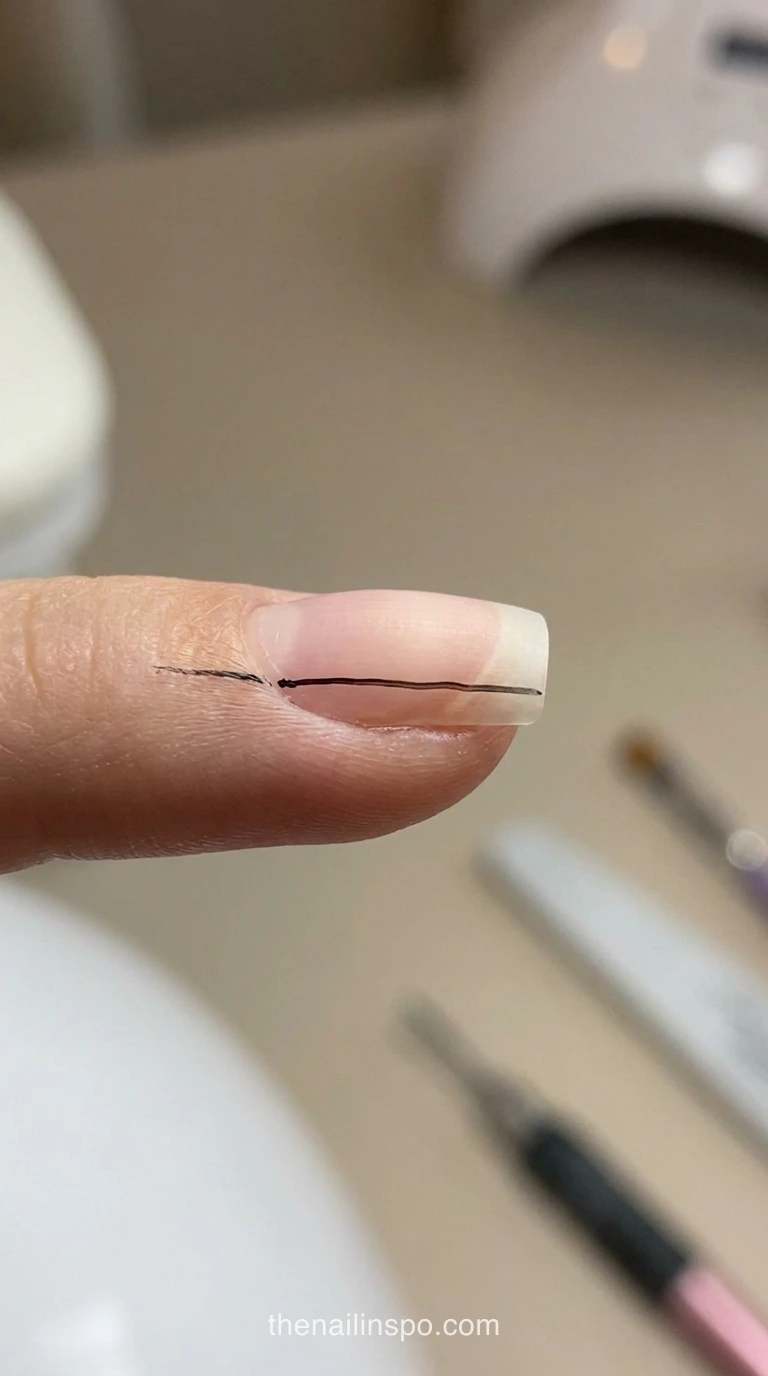
Keep the extension under half the natural bed and the free edge stays a support. Go longer and every knock on the tip gets amplified by the distance from the bond, which is why a few extra millimeters can separate a solid set from a lifted one.
Sophia Beed’s note: when a client says “just a little longer,” I measure the bed before I agree. A little longer is usually how a set starts to lift.
Why Half the Nail Bed Is the Ceiling
Half the bed is a working rule from practice, not a published standard. It holds because it keeps the free edge short enough to stay supported. I’d rather you hold to it than chase a longer shape on a nail that can’t carry it.
Acrylic Popping Off Bitten Nails
Techs report that on nails bitten to the quick, plastic tips angle downward against swollen fingertip skin and pop off. The fix is a custom-cut sculpting form that closes the air gap under the free edge, which a plastic tip can’t do.
Acrylic Overlay vs Full Set: Which to Book
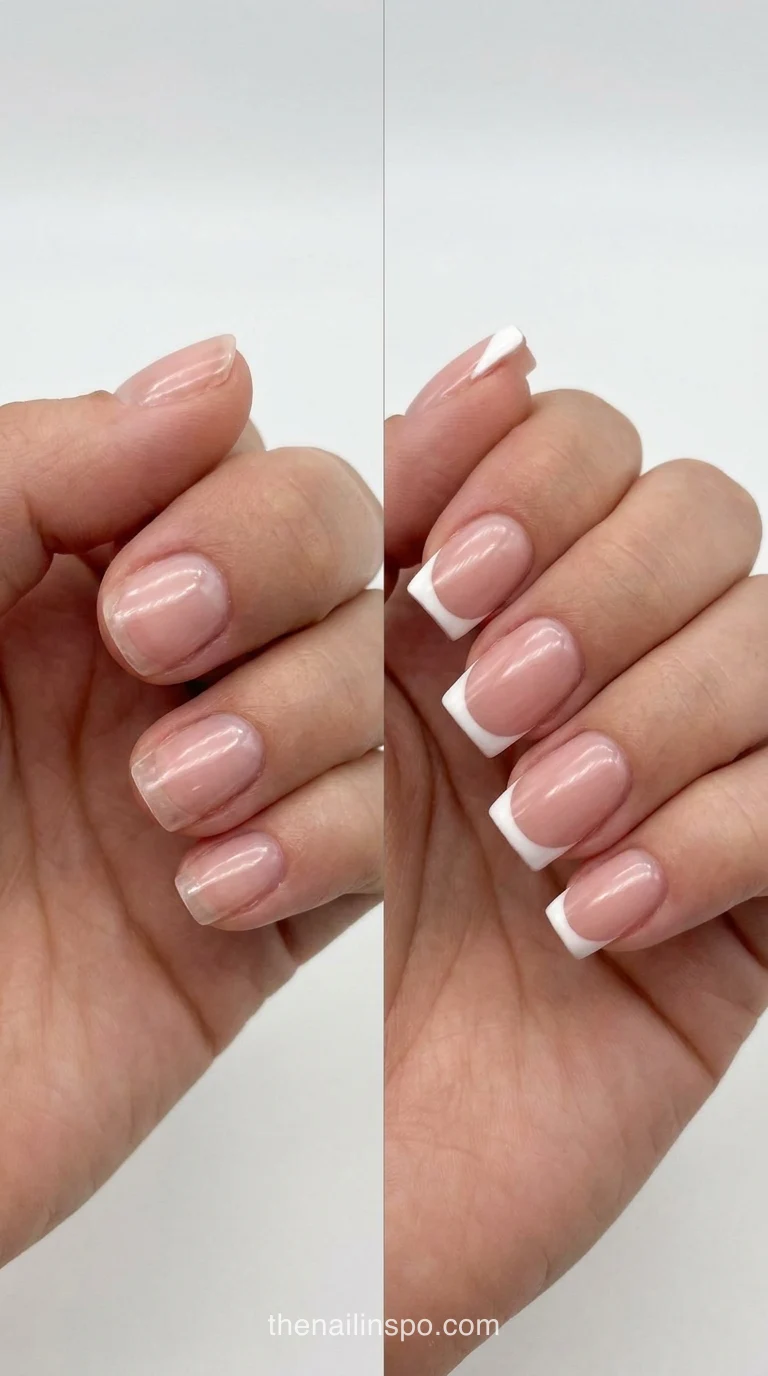
For most short nails, book the overlay. It builds over your own nail without tip extensions, so you keep the length you already have. A full set only earns its place when you want length past your fingertip and the bed can carry it.
| Option | Price (2026 US salons, USD) | Time | Verdict |
|---|---|---|---|
| Acrylic overlay | $40 to $65 | 60 to 90 minutes | Default for short nails, since it builds on your own nail with no tip extensions. |
| Short full set | $45.50 to $95+ | 60 to 120 minutes | Only when you want length past the fingertip and the bed can carry it. |
The price gap comes from the tip extensions, so ask whether the tip is included and how far it reaches past your fingertip before you book.
Is a Short Full Set Worth the Extra Cost?
Usually not on a short bed. The extra charge covers tip extensions, and tips are where a short bed gets punished. If you still want the length, ask the tech to show you the tip placement on your own hand before you pay.
Choosing When Length Is the Goal
If you want the nail longer than your fingertip, a short set stops being a short set. Then the 50% rule decides, and if the bed can’t carry the extension, the honest answer is an overlay.
 Read NextHard Gel vs Acrylic: Which One Is Best for You?
Seven Steps to Stop Acrylic Lifting on Short Nails
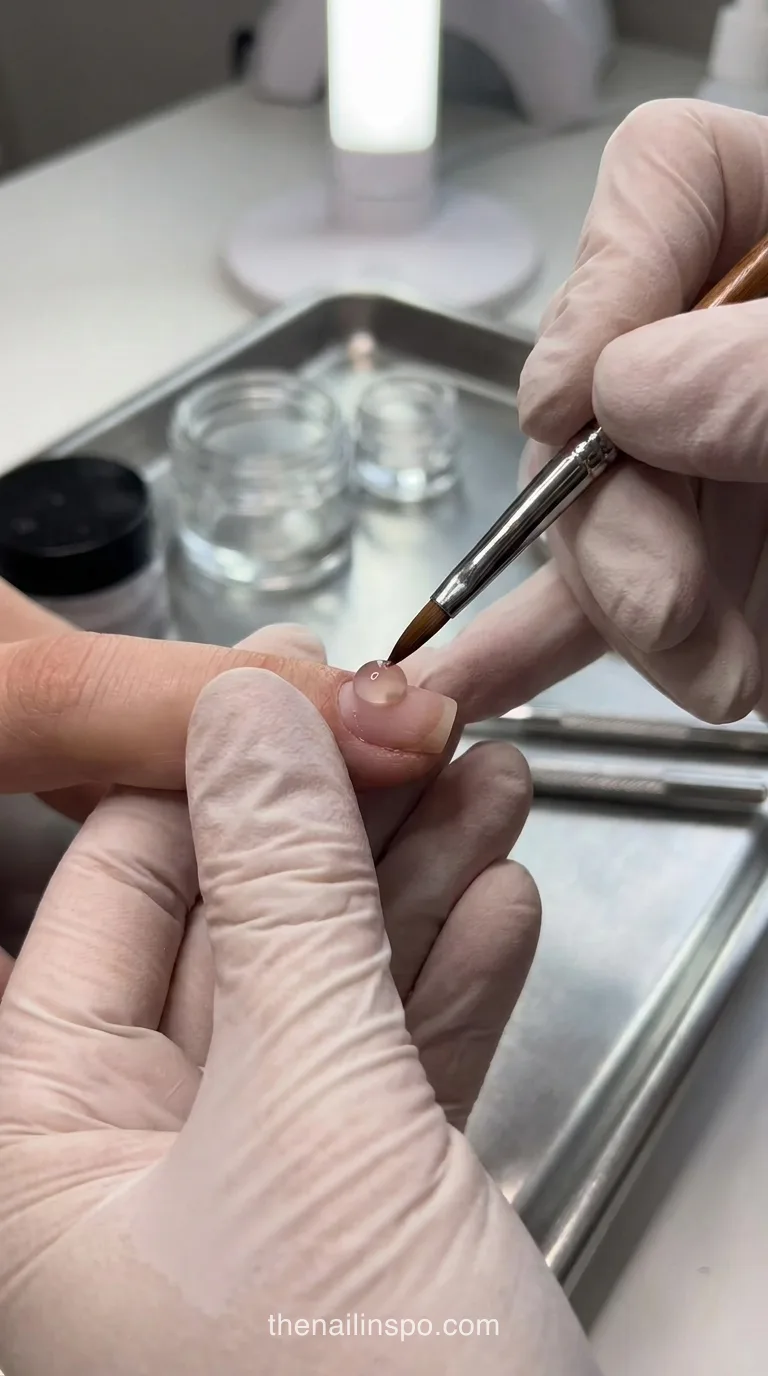
Lifting starts when the product, the natural plate, and the prep disagree. The order below matters as much as the products, because each step closes one gap, and skipping one usually shows up later as a lift.
Monomer-to-Powder Ratios on One Nail
One nail needs three bead consistencies, not one. The cuticle gets a wet bead, feathered flush, with 60 to 90 seconds of working time. The apex gets a standard 1:1.5 medium bead with 40 to 60 seconds. The free edge gets a dry bead for rigidity, and it only gives you 15 to 30 seconds to work it.
- Measure the bed and confirm the extension sits inside the 50% line before you start.
- Prep dry. Skip water-based cuticle removers and soaks, since a swollen plate shrinks away from the curing product.
- Apply the wet bead flush at the cuticle and feather it toward the sidewalls.
- Build the medium bead at the apex, then check the nail from the side before it cures.
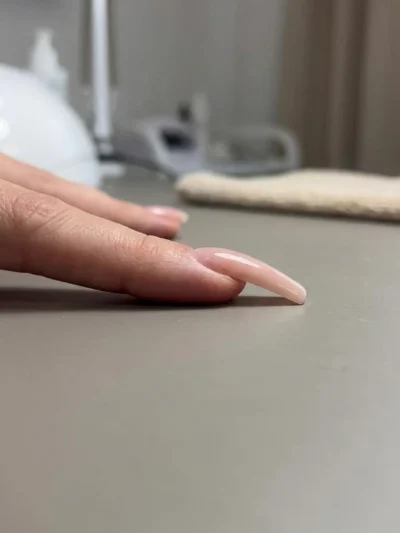
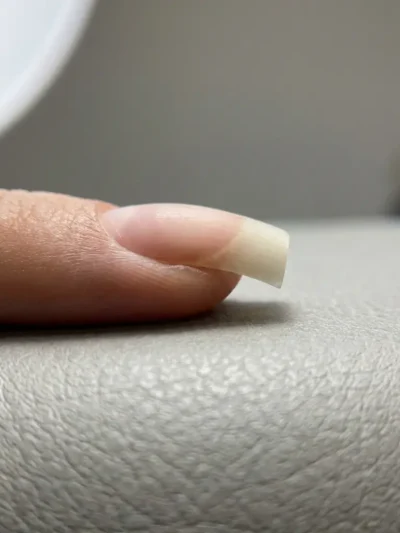
- Shape the C-curve so the nail reads as a curve from the side, not a flat plate.
- After the first hour, when the product is about 60% cured, apply the dry bead to the free edge and file it.
- Apply the top coat, then bevel the free edge at 45 degrees to tuck the natural nail under.
Where the Apex Goes on a Short Nail
The apex is the thickest point of the structure, and it belongs in the back third of the nail over the stress area. Centering a thick apex on a short nail creates a clubbed look, and techs report it lifts early. Thickness runs 1.0 to 2.0 mm, and the arch should sit between 35% and 50% of the C-curve.
Sophia Beed’s note: the 15 to 30 seconds on the dry bead is the window new techs miss most. If a free edge chips early, I’d look at that bead before anything else.
 Read NextNail Apex Placement: 6 Best Steps for the Perfect Set
TMO-Based Top Coats and the Soak-Off Habit
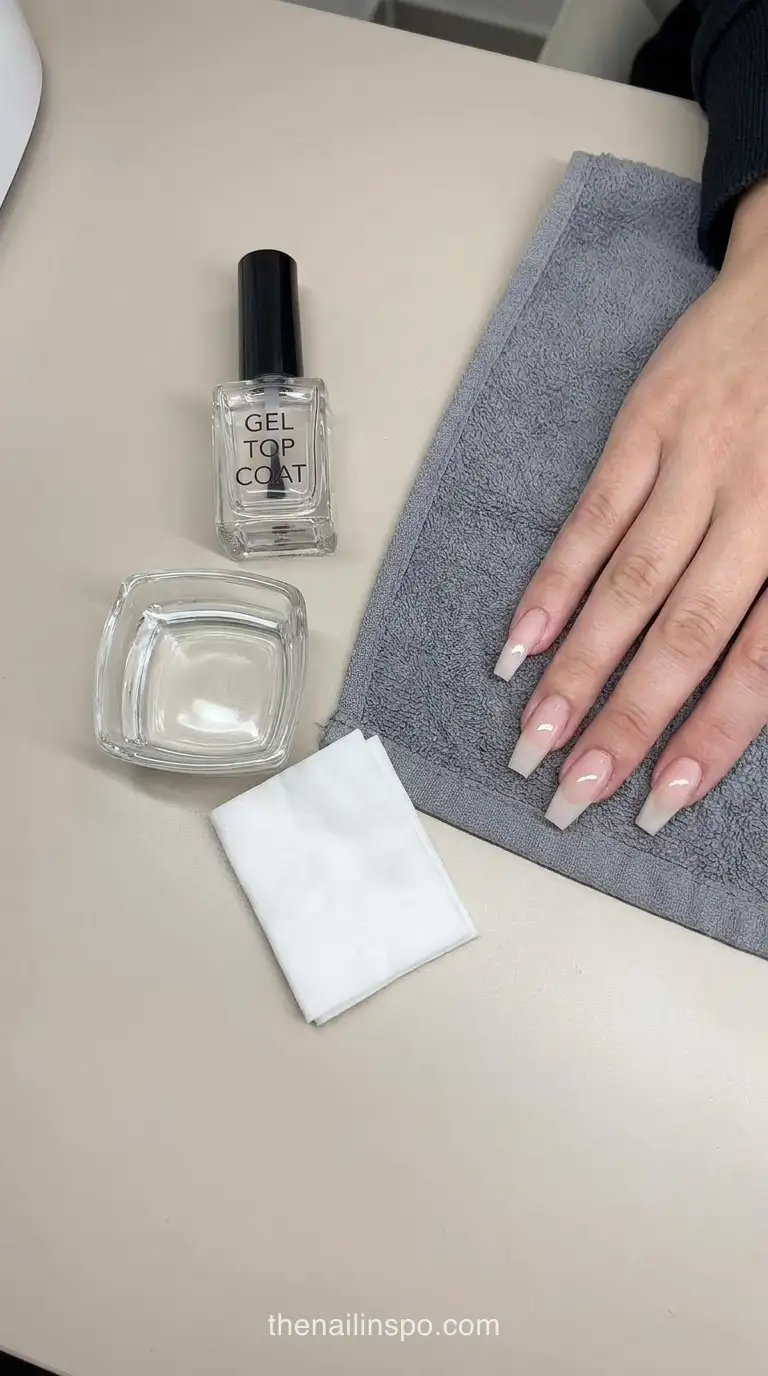
The 2026 change that matters is in the top coat. The EU banned the gel photoinitiator TPO in nail products from September 1, 2025, so brands are moving to TMO-based top coats. It only affects gel products, so check the label on yours before you assume your system changed.
Acetone Soak-Off Damage Builds Up
Repeated acetone soak-offs and 180-grit re-preps thin the natural plate far more than a steady refill schedule does. You won’t see the damage until a set lifts, and by then the base is the problem, not the product.
Why Refills Beat Breaks Between Sets
Refill every 2 to 3 weeks over an intact base instead of taking breaks. A break means a full removal, which means another soak and another 180-grit re-prep. Dead keratin doesn’t breathe, so the break gives the nail nothing it needs. My position: skip the break and protect the base.
Recommended for you- pincer nail shapes: read this if your short nails already curve hard at the tip, since the apex and C-curve rules carry over.
Questions Short-Nail Clients Ask Most Often
Is HEMA banned in acrylic or gel nail products?
Not as far as I can tell. I haven’t seen any regulator confirm a 2026 HEMA ban, so the viral posts aren’t backed by a rule I can point to. HEMA remains legal for professional salon use in the EU and UK, and it isn’t federally restricted in the US. Labeling and concentration rules vary by country, so check the product’s safety data sheet and ask your tech which monomer they use.
How do I tell if a lift comes from the product or my prep?
Timing is the clue. A lift at the cuticle that shows up soon after the service usually points to moisture or prep, since a plate that was swollen or wet when the product went on will shrink away from it. A lift at the free edge after a few weeks usually points to length, the bevel, or an apex sitting too centered.
How should I remove short acrylics without damage?
File the bulk down first, then soak in acetone only until the product loosens. Don’t pry or peel, since that tears the natural plate. If the nail stings, bleeds, or the plate lifts, stop and see a professional before trying again.
Before your next appointment, measure your bed and write down the length the tech proposes. Then check it against half that bed. If the tip runs past the line, ask for an overlay or a shorter tip, and keep the free edge short enough that the next refill still has something to hold onto.
Comments (0)
No comments yet. Leave a thought below!