By Tanya, editorial manicurist and beauty stylist (Miami). Published September 30, 2026. Last updated September 30, 2026. No affiliate links; every product mention is editorial.
The best blue nail polish shades for your hands are the ones that contrast with your skin depth, at a saturation you can live with for a week. Deep skin carries saturated cobalt and ultramarine; fair skin usually looks cleaner in navy than in dusty periwinkle. That’s the working rule I’ve landed on after six-plus years styling hands for runway shows and bridal catalogs in Miami. Nobody has run a controlled study proving one blue flatters one skin tone best, so treat every pick here as a starting point you test on your own nail.
Key takeaways- How much a blue contrasts with your skin depth predicts how it reads on the hand better than a warm or cool undertone label does.
- Undertone is a tiebreaker: warmer skin tends to suit green-leaning blues, cooler skin tends to suit violet-leaning ones.
- Popular skin-tone charts recommend conflicting blues for the same complexion, so no single chart deserves to be followed as a rule.
- Saturated blue and teal pigments are widely reported to stain nails, and a base coat lowers that risk without eliminating it.
- Thin coats applied in a room around 68 to 72°F are the simplest defense against bubbles in dark blue lacquer.
Best Blue Nail Polish Shades by Undertone and Contrast
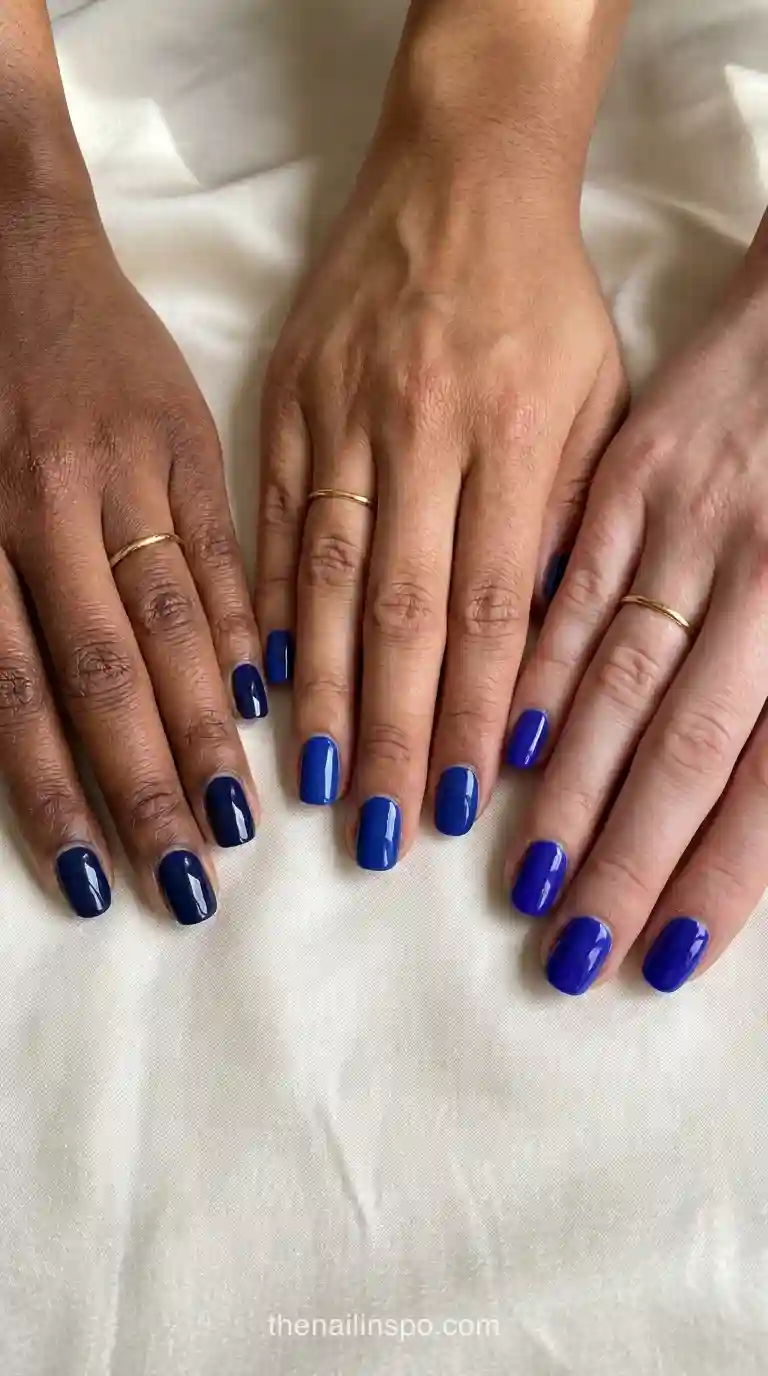
Start with contrast, then use undertone to break ties. A blue that sits much darker or much brighter than your skin looks deliberate, while a blue at the same depth as your skin tends to go muddy. Warmer skin usually prefers blues with a drop of green in them; cooler skin usually prefers blues that lean slightly violet.
I swatch on the full ring-finger nail, never on a nail wheel. A wheel has no skin around it, and the skin around the nail is the whole question.
Blue Nail Polish for Dark Skin: What Pops
On deep skin, saturated blues win because they hold their color against a rich background instead of sinking into it. Cobalt and ultramarine are my first two picks. Pale pastels can look striking too, but only in an opaque formula; a sheer baby blue goes streaky at two coats and needs a third.
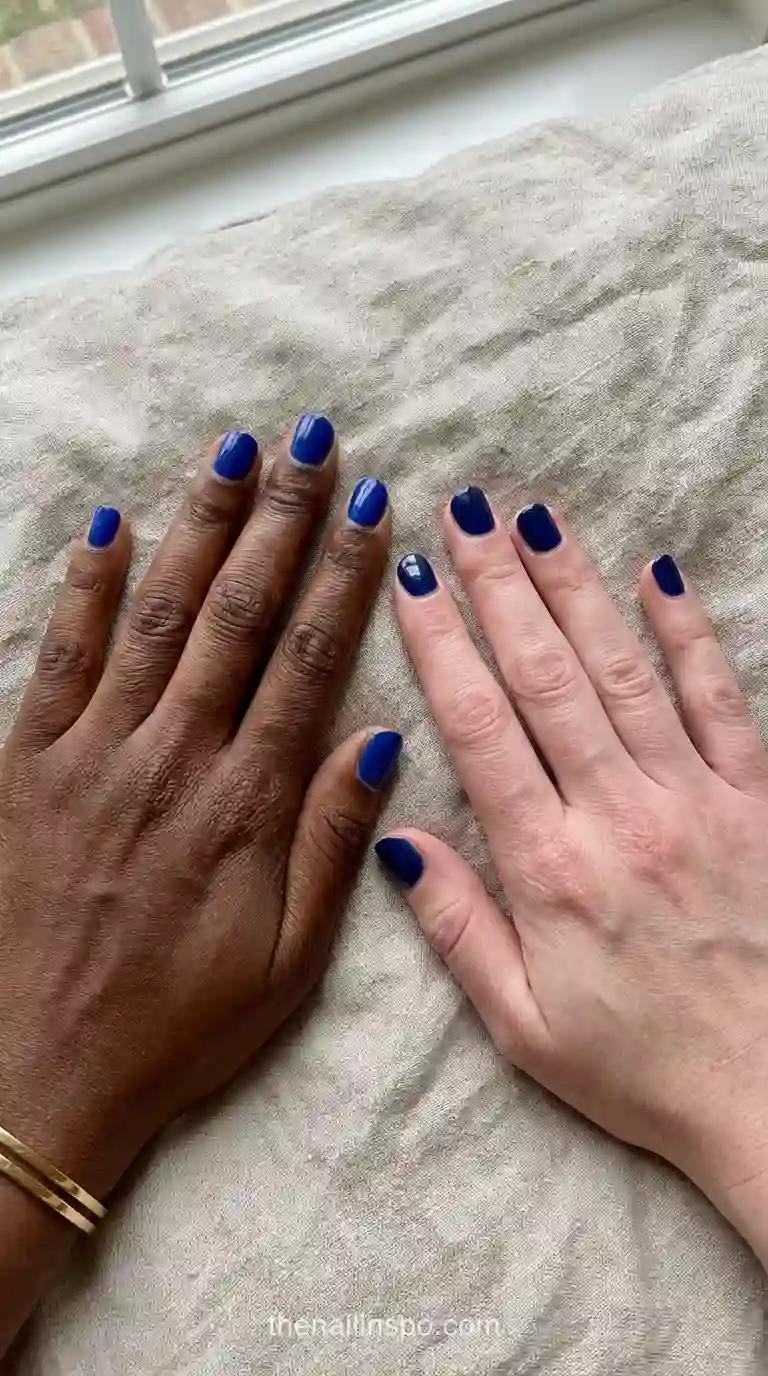
Here’s where I’ll disagree with most guides: I’d skip navy on deep skin unless it’s for work. It drops so close to black that you lose the blue you paid for.
What Blue Nails Suit Fair Skin?
Fair skin gets the most out of navy and clean, bright cobalt. The trap is dusty, gray-leaning periwinkle. On pale or pink-toned hands it tends to pull the skin toward ruddy, and the knuckles look redder next to it. That’s a pattern I see in fittings, not a law, so swatch before you commit.
Olive and Medium Skin: Choose Saturation
Olive and medium skin can wear nearly any hue, which is why the variable that matters is saturation. Grayed, muted blues can exaggerate the green cast in olive skin. I steer toward the clear version of whatever family you like: a true teal rather than a sage-blue, a bright cobalt over a slate.
 Read NextCute Nails 2026: 22 Best Milky Looks You Will Obsess
Comparing Blue Manicure Shades From Navy to Periwinkle
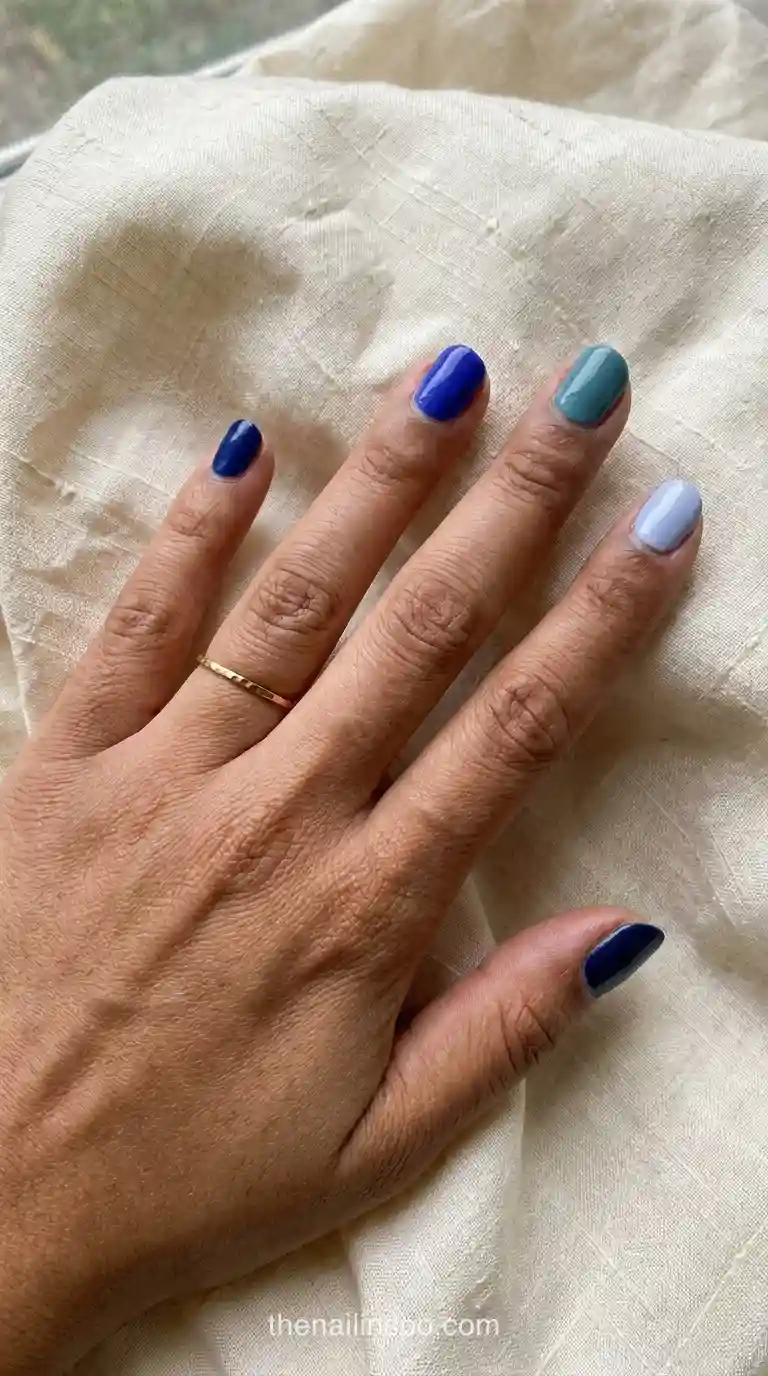
Sort blue manicure shades by family, not by brand. Formulas get reformulated every season, but the way a navy or a periwinkle behaves on a hand stays put. Read the failure column first: it’s the part shade charts almost never print.
| Shade family | Reads best on | Where it fails | Verdict |
|---|---|---|---|
| Navy | Fair and medium skin, and almost anyone for work | Can read as black under warm indoor bulbs and in low-light photos | Best all-rounder and my pick for a first blue manicure |
| Cobalt / royal blue | Deep and fair skin, where contrast is naturally high | Tip wear shows loudly because the color is so bright | Best high-contrast blue; keep nails short so chips read less |
| Ultramarine | Deep and olive skin | Among the pigments most often reported to stain the nail | Best statement blue, as long as you never skip the base coat |
| Teal / peacock | Warm and olive undertones | Leans green under fluorescent office light | Best for warm skin that finds true blue harsh |
| Periwinkle / baby blue | Deep skin in opaque formulas, medium skin in clean versions | Sheer formulas streak and often need a third coat | Conditional pick: buy only the opaque version |
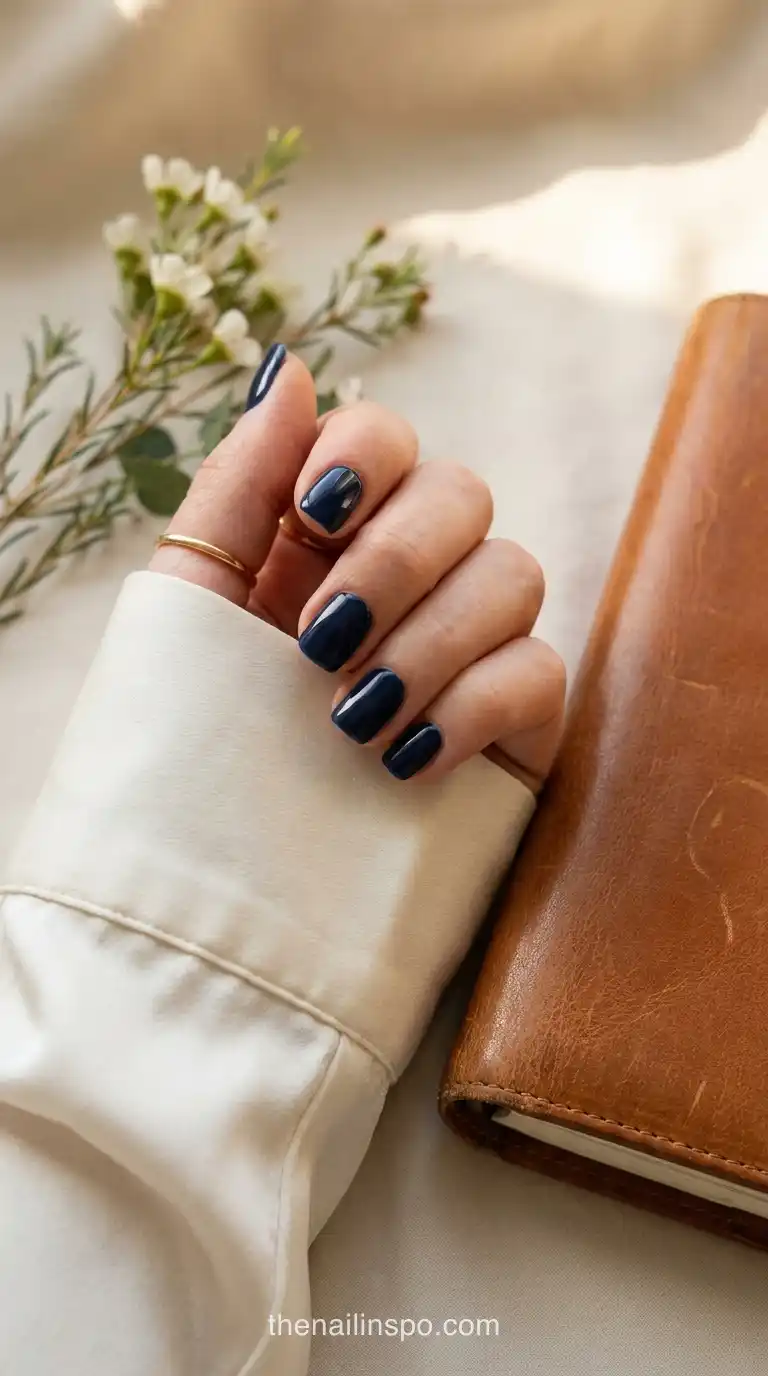
Navy Blue Nail Polish for Work and Weddings
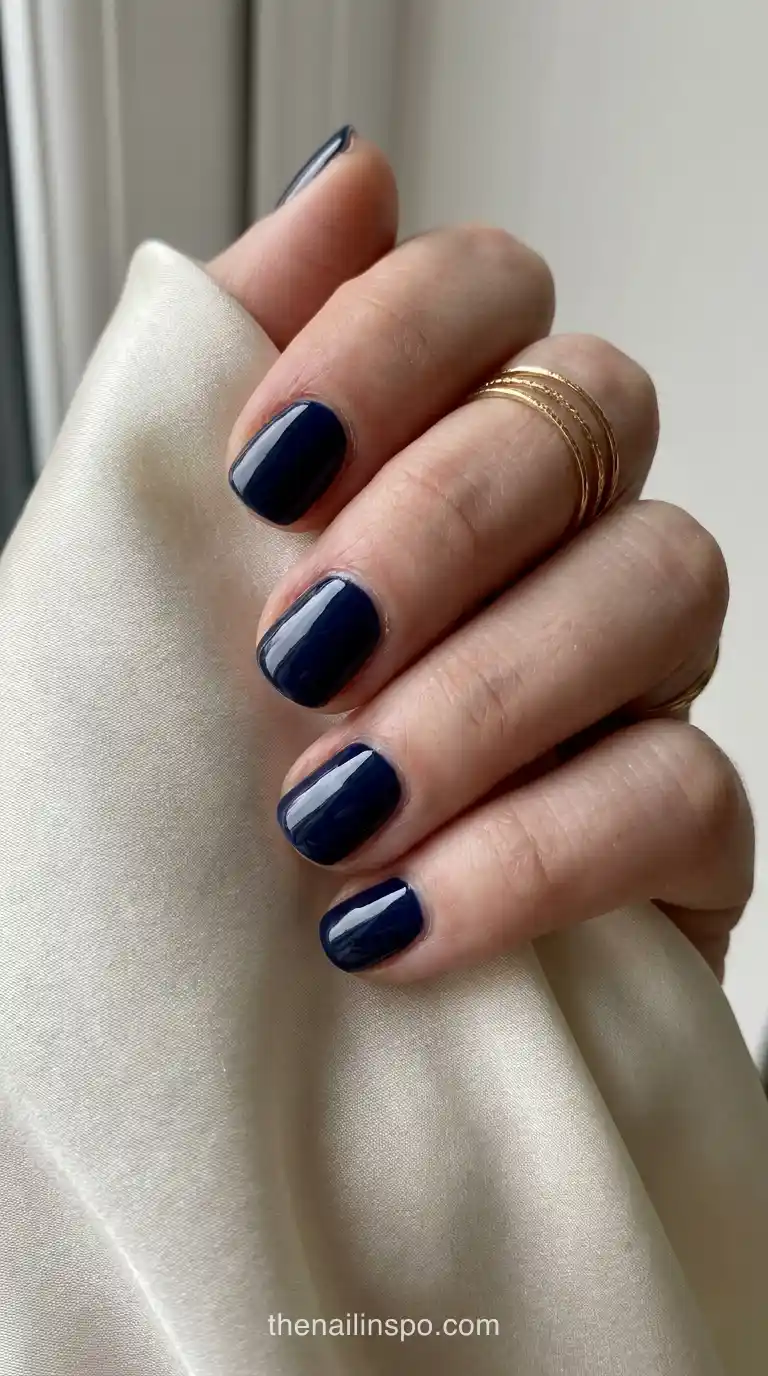
Navy is the one blue I’d send into any office, and it’s my default suggestion for a bride who wants blue but worries it’s too loud. Pick a navy that shows visible blue in the bottle in daylight. If it looks black in the bottle, it’ll look black on your hand. For stricter dress codes, the breakdown in whether you can wear blue nails to work covers the gray areas.
Something Blue Bridal Nails for Photos
For something blue, put the color where it won’t fight the ring. A single accent nail on the non-ring hand, or a sheer blue wash over a pale base, gives you the tradition without stealing the close-up. Full cobalt on both hands pulls the eye away from the ring shot, and that’s the photo couples care about most. My rule for bridal sets is simple: no saturated blue on the ring finger.
Why Skin Tone Charts Get Blue Nail Colors Wrong
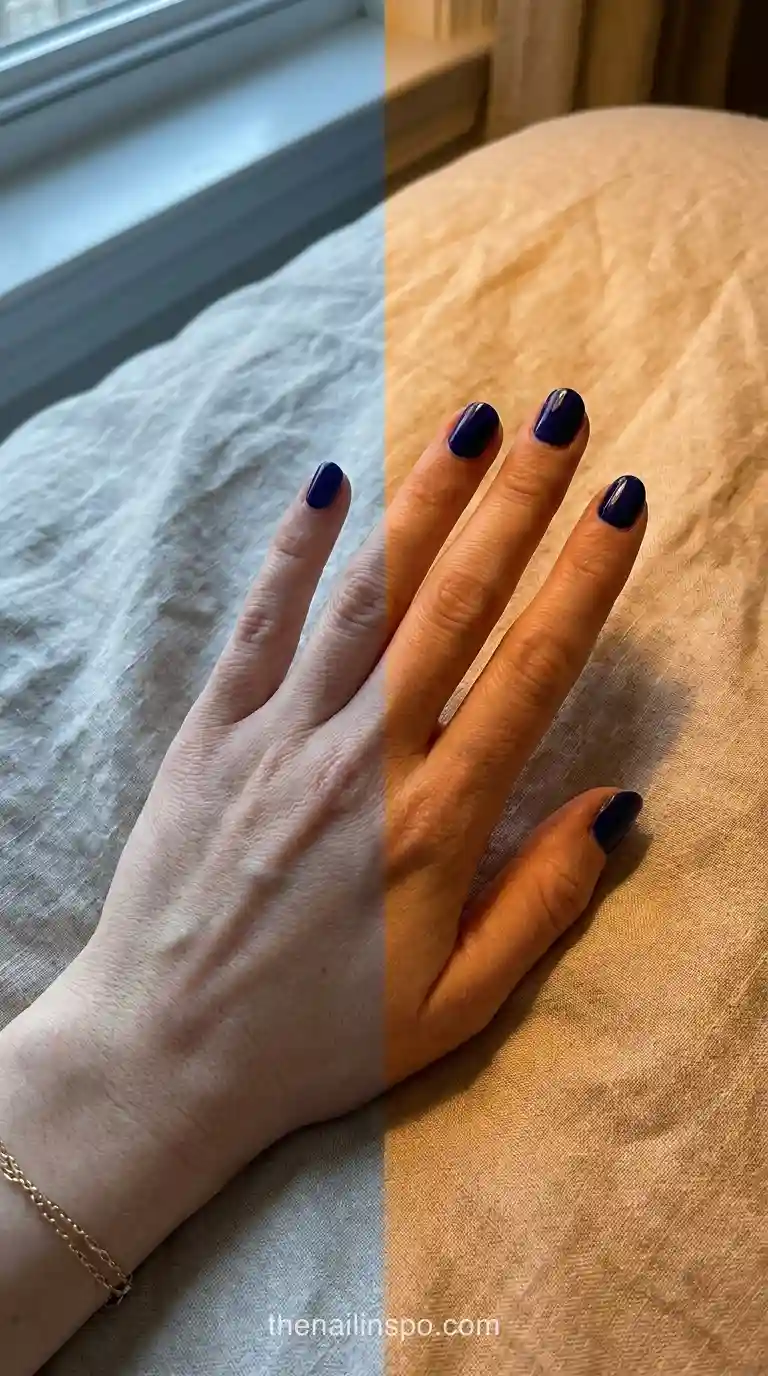
Skin-tone charts treat a loose suggestion as a matching law. Five of the pages currently ranking for this topic all prescribe blue nail colors by complexion category, and their picks conflict with each other. No controlled evidence establishes a universally best blue for any skin tone, so a chart’s confidence is borrowed, not earned.
Lighting makes it worse. Warm bulbs carry less blue light, so a blue shifts darker indoors than it looks by a window, and a chart can’t account for where you’ll actually be wearing it.
Why Five Guides Disagree on the Same Blue
The guides disagree because a word like fair or deep describes skin depth, while warm or cool describes undertone, and most charts collapse both into a single row. Deep skin can be cool. Fair skin can be olive. I’d rather you ignore charts entirely than follow one built for someone else’s undertone.
Ultramarine Pigment Is the 2026 Blue
My forecast pick for 2026 is ultramarine, the saturated blue that leans a touch violet and sits between cobalt and navy. That’s a trend call, not sales data. If you want to try it, Gel by Essie New Highs is a 0.46-fl-oz ultramarine priced at US$13, with a manufacturer wear claim of up to 15 days. I’d choose it over a standard lacquer when the color has to survive a trip or a wedding week, and I’d plan on fewer days if your hands are in water a lot.
Tanya’s note: That up-to-15-days figure depends on refreshing the top coat on day 7, according to the brand. Put the reminder in your phone the day you paint.
 Read NextBest November Nails Ideas 2026: 45 Gorgeous Styles!
How to Apply Blue Polish So It Won’t Stain Your Nails
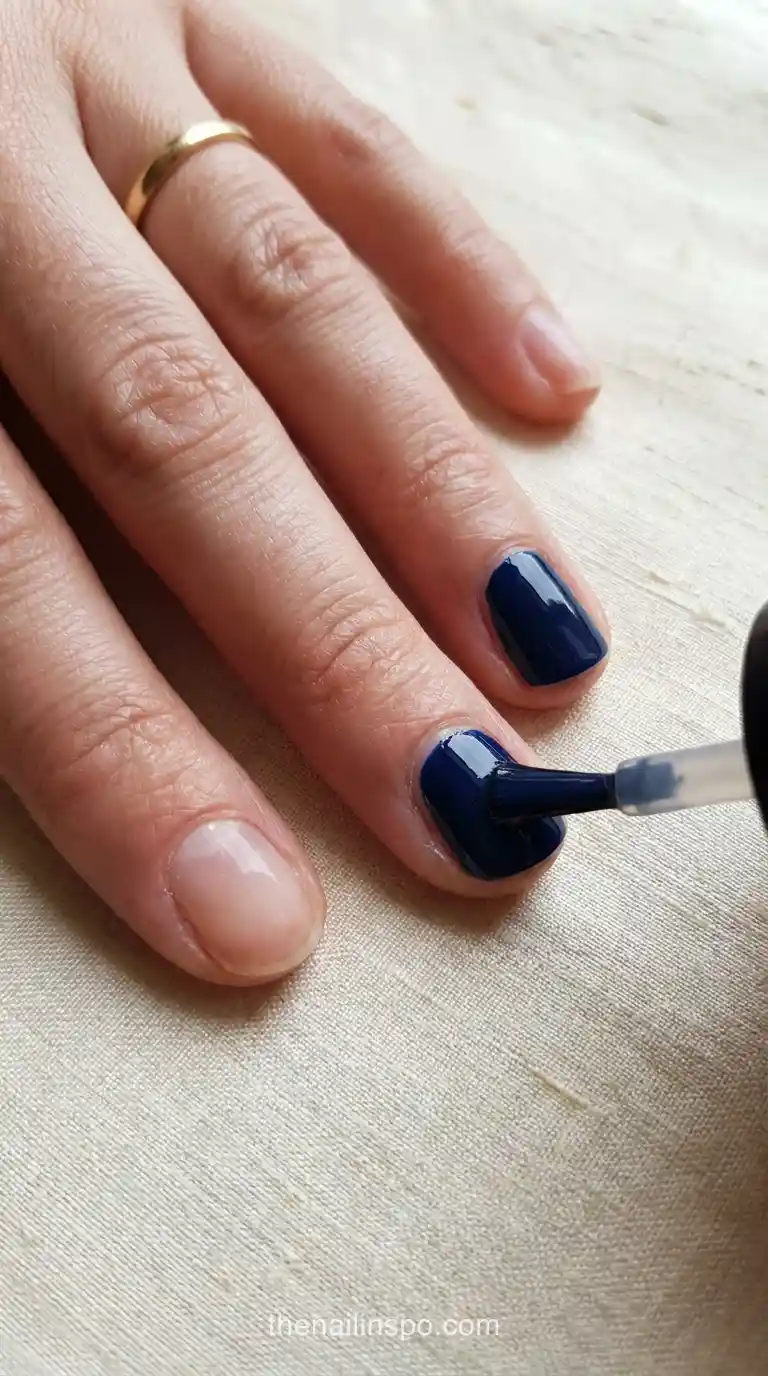
Build four thin layers: two color coats sandwiched between a base coat and a top coat. It’s the standard lacquer routine, but blue punishes shortcuts harder than a nude does. Dark pigment shows every bubble, and saturated blue is the color family users most often say leaves a stain behind.
Step 1: Base Coat Before Any Blue Pigment
Wipe each nail with polish remover so it’s clean and dry, then apply one base coat and let it set before any color goes on. It puts a layer between the pigment and the nail plate. Users consistently report that heavily pigmented blues and teals can stain; a base coat reduces that transfer, but it doesn’t guarantee a clean nail at removal. Never skip it for blue, even for a one-night look.
Step 2: Thin Coats Stop Nail Polish Bubbles
Paint two thin color coats and wait 30 to 60 seconds between them, which is Essie’s guidance. A thick coat skins over on top while solvent is still trapped underneath, and that solvent is what surfaces as bubbles. Accept a patchy first coat. The second one evens it out.
Tanya’s note: Paint in a calm room around 68 to 72°F. Next to an AC vent or in a steamy bathroom, the surface dries unevenly and dark blue is the first color to show it.
Step 3: Cap the Free Edge With Top Coat
Apply one top coat, then run the brush along the tip of each nail to wrap the edge. Bright blue shows tip wear faster than pale shades because a chip exposes bare nail right next to saturated color, and capping the edge slows that down.
Step 4: How Long Nail Polish Takes to Dry
Essie advises about 15 minutes for initial drying and 2 to 3 hours before the manicure is completely dry. Touch-dry at 15 minutes isn’t the same as set, and that gap is when dents and sheet marks happen. I paint blue after dinner, not right before bed.
Recommended for you- A complete guide to liquid gel nails: how gel-style formulas compare if you want blue to last past a week
- Hanukkah nail designs and ideas: blue and white sets built for the holiday season
Questions I Get Asked Most About Blue Polish
Is gel or regular polish better for blue nails?
Regular lacquer is the better choice for a single event, because it’s easy to change and quick to remove. Gel-style formulas make more sense for a trip or a busy two weeks, since they hold saturated blue longer between touch-ups. The tradeoff is removal: gel-style products take more time and patience to come off cleanly.
How do I get a blue stain off my nails?
Most nail polish staining from blue grows out with the nail over a few weeks. Light buffing can lift some of it, but heavy buffing thins the nail, so I’d rather cover the stain with a sheer pink or another blue while it grows out. If a discoloration isn’t from polish, or doesn’t grow out, that’s a question for a doctor, not a manicurist.
Does blue polish look better with gold or silver jewelry?
Gold is my pick for navy and ultramarine because it warms up a cool blue and keeps the hand from looking icy. Silver suits cobalt and baby blue when you want a colder, cleaner look. Neither is wrong, but mixing both on the same hand usually looks accidental rather than styled.
Is matte blue polish a good idea?
Matte works on navy for a winter look, but it flattens cobalt and teal toward gray and takes away the brightness that makes them worth wearing. Matte top coats also pick up hand oils and turn shiny at the tips within a few days, so expect to reapply sooner than you would with gloss.
Before you buy your next blue, take two photos of your bare hand holding the bottle: one by a window, one under your home bulbs. If the shade works in both, buy it. If it only looks right in one, it’s a lighting blue, and you’ll notice the other version every evening you wear it.
Comments (0)
No comments yet. Leave a thought below!